



Korean etiquette is not one fixed script. Expectations change by age, relationship, region, workplace, household, and setting. Visitors do not need perfect gestures or formal Korean. Paying attention, following posted rules, and responding politely when corrected matters more than performing a stereotype.
Begin with a simple greeting
“Annyeonghaseyo” is a useful polite hello. A small nod or bow can accompany it, but an exaggerated bow is unnecessary. In shops and restaurants, acknowledge staff when entering or receiving help. “Gamsahamnida” means thank you.
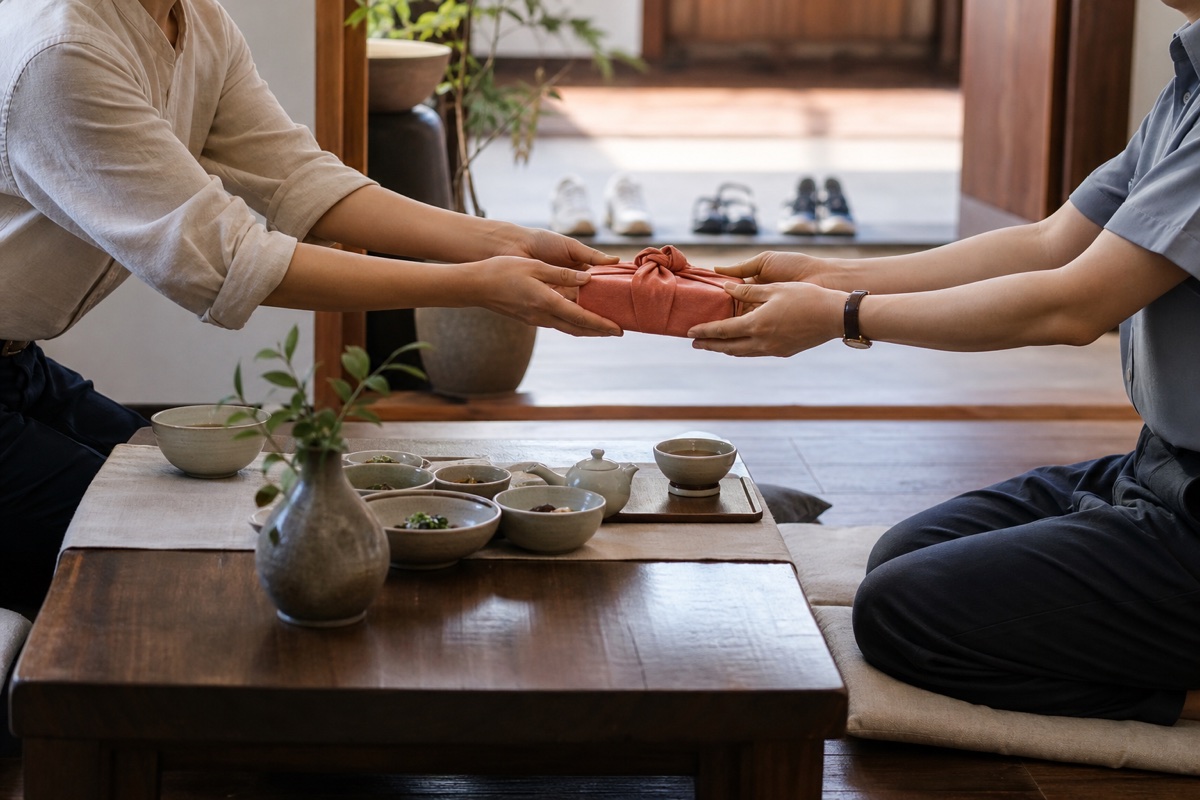
When giving or receiving an important item, using both hands—or supporting one wrist with the other hand—is a considerate gesture, especially in a formal or age-conscious setting. It is a helpful default, not a rule that every Korean follows in every casual exchange.
Follow the space you are entering
Homes, some traditional accommodations, and certain restaurants require shoes to be removed. Look for a raised floor, shoe shelf, slippers, or the host’s behavior. Keep socks clean and do not step on the shoe-removal area after taking shoes off.
At temples, memorials, palaces, schools, and residential hanok areas, signs may restrict noise, food, clothing, or photography. A place that is visually beautiful may also be a working religious site, home, or institution.
Public transport etiquette
Queue behind floor markings and allow passengers to exit before entering. Keep bags out of seats and doorways. Seoul buses generally use the front door for boarding and the rear for leaving; tap the transportation card when boarding and alighting.
Priority seats are intended for passengers who need them. Some subway cars also designate seats for pregnant passengers. Keep conversations and phone audio quiet, use headphones, and move away from train doors when space allows. During crowded periods, take off a backpack or hold it low to reduce accidental contact.
At restaurants
Wait to be shown a table when staff are managing seating. Water, side dishes, utensils, and ordering can be table service, self-service, stored in a table drawer, or managed by a kiosk. Look for signs and copy the flow rather than assuming.
Many casual Korean restaurants do not expect tipping, according to the Korea Tourism Organization’s visitor guidance. In a hotel, tour, or international service where a separate policy applies, follow that business’s instructions. Do not leave money behind simply because tipping is customary in your home country.
Shared dishes are common, but use serving utensils when provided. If you have allergies or dietary restrictions, explain them before ordering. A polite translation helps but cannot guarantee separation in a shared kitchen.
Waste, trays, and shared facilities
Korea uses detailed waste and recycling systems, but the exact bins and rules vary by building and municipality. Match the label and picture on the bin. Do not leave takeaway cups on a wall or place mixed waste into a recycling opening because a public bin is not nearby.
At cafés and food courts, return trays only when a return station is provided. In some table-service businesses, staff will clear the table.
Photography and filming
- Ask before photographing a recognizable person at close range.
- Do not record staff during a disagreement.
- Respect no-photo signs in shops, exhibitions, performances, and religious spaces.
- Keep tripods and repeated poses out of narrow streets and transit paths.
- Never photograph a ticket barcode, private document, or child without permission.
A location’s popularity on social media does not remove the privacy of residents or customers.
Names, age, and conversation
Korean names are often written family name first in Korean contexts, but individuals may present their names differently in English. Use the form a person gives you. Age can influence speech and social roles, but visitors do not need to ask everyone’s age. If a conversation becomes personal, it is acceptable to answer briefly or redirect politely.
When you make a mistake
Say “Joesonghamnida” for a polite apology, correct the action, and move on. Most small visitor mistakes are solved faster by calm cooperation than by a long explanation. If you do not understand a rule, ask “Eotteoke hamyeon dwaeyo?”—“What should I do?”—or use a translation app.
The most useful etiquette rule
Observe first. Is there a queue? Are others returning trays? Did the host remove shoes? Is the alley marked as residential? Following the immediate context is more respectful than memorizing a list of supposed national habits.
Last fact-checked: July 25, 2026. This guide describes useful visitor defaults, not universal behavior.
