


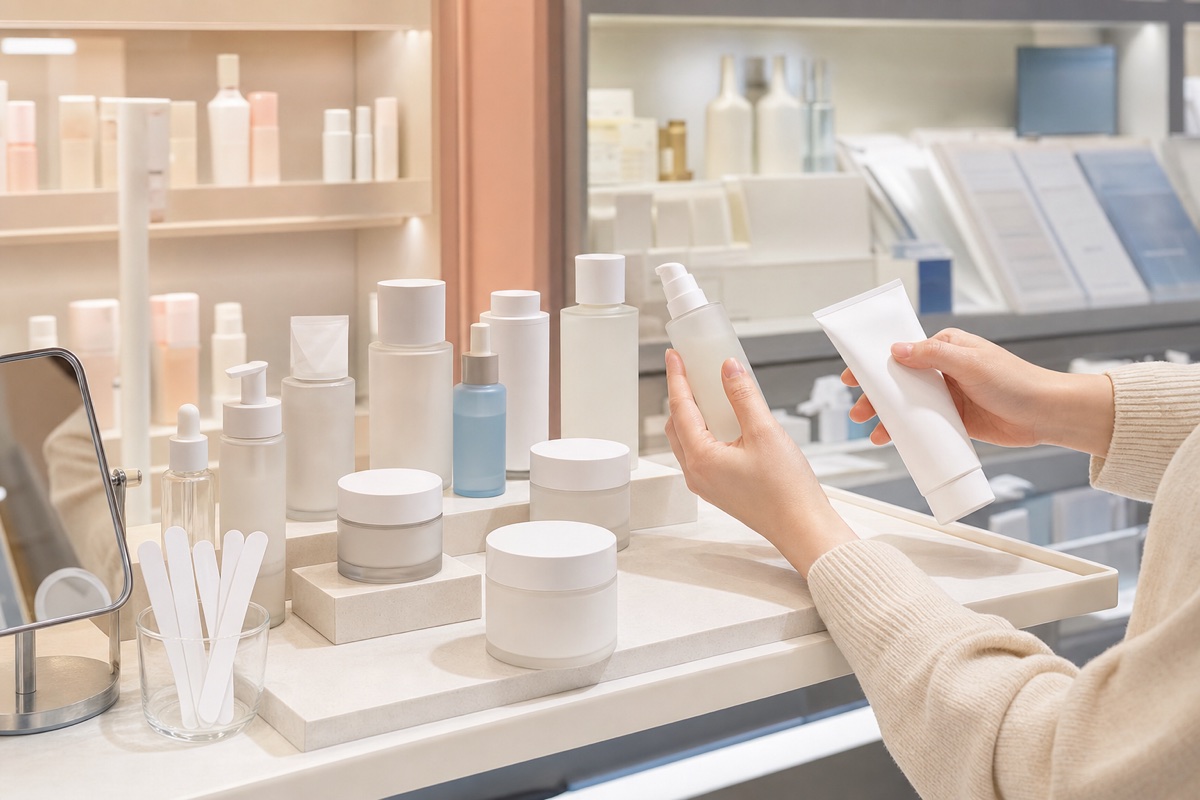

K-beauty shopping is easier when you begin with a routine instead of a trend. A product’s popularity does not show whether it suits your skin, combines well with what you already use, or can be returned after purchase. This checklist focuses on labels, realistic quantities, and safe testing rather than promising a skin result.
Define the job of each product
Write down the one or two gaps in your current routine: cleanser, moisturizer, sunscreen, makeup remover, lip product, or another specific category. Bring photographs of products and ingredient lists that already work for you. This reduces duplicate purchases and makes comparison easier when packaging is unfamiliar.
For a first shopping trip, a small set is more useful than a complete new routine. Introducing several products at once can make it difficult to identify what caused irritation.
Read the label, not only the front claim
Look for the product name, purpose, amount, ingredient list, use directions, warnings, manufacturer or responsible seller, lot information, and expiration or use-by marking. An English sticker may summarize the Korean package but should not replace checking the original product and seal.
Words such as “clean,” “natural,” “dermatologist tested,” or “hypoallergenic” should not be treated as a guarantee that a product cannot irritate you. Compare the full ingredient list with known allergies and sensitivities. Korea’s Ministry of Food and Drug Safety requires specified fragrance allergens to be identified rather than hidden entirely under a general fragrance label, but individual reactions can still vary.
Be careful with strong claims
Cosmetics can support appearance and skin care, but they are not a substitute for diagnosis or treatment. Be cautious when a seller promises to cure acne, eczema, pigmentation, hair loss, or another medical condition. Ask a qualified health professional about a persistent or severe concern.
If a product contains an active ingredient that is new to you, learn how it fits with your existing routine and begin slowly. “More” is not automatically better.
Use testers hygienically
- Use a disposable applicator when provided.
- Do not apply a shared lip or eye tester directly to the face.
- Test color on a clean area and remove it before trying another product.
- Do not open sealed retail stock to create your own tester.
- Wash or sanitize hands between products when the store provides facilities.
A store tester shows texture or color; it is not a full safety test.
Patch test after purchase
Follow the manufacturer’s directions. When trying a leave-on product, test a small area first and wait long enough to notice a reaction before broad use. Stop if you experience significant burning, swelling, hives, or worsening irritation, and seek medical care when needed. This guide does not replace medical advice.
Check authenticity and the seller
Buy from an official brand store, established retailer, department store, pharmacy where appropriate, or an authorized online seller. Compare the seal, batch information, package quality, and official product listing. A price far below normal retail can be a reason to investigate rather than an automatic bargain.
Keep the receipt and avoid removing seals until you confirm the return policy. Cosmetics often have stricter returns after opening, and rules differ between stores and platforms.
Compare value by usable amount
Large bundles are only valuable when you can use the product before it expires and transport it safely. Compare volume, unit price, refill availability, and your baggage allowance. Remember that airline cabin-liquid rules and destination-country customs rules apply separately from Korean retail rules.
Understand tax refund basics
Foreign visitors may be eligible for a Korean VAT refund at participating stores when the purchase and stay meet the current requirements. Look for the tax-refund sign before paying, carry the required identification, keep the receipt and refund document, and do not open or use goods when the refund terms require them to leave Korea unused.
Thresholds and procedures can change. VISITKOREA’s current guide explains immediate, mobile, city, airport, and port processes. Duty-free purchases and tax-refund purchases are not the same system.
A beginner shopping list
- One familiar category you already use.
- One new product selected after an ingredient check.
- A receipt and photograph of the package and lot information.
- A note of the store’s return and refund rules.
- A plan to introduce one new leave-on product at a time.
Last fact-checked: July 25, 2026. Product formulas, labels, tax rules, and airline restrictions can change.
