



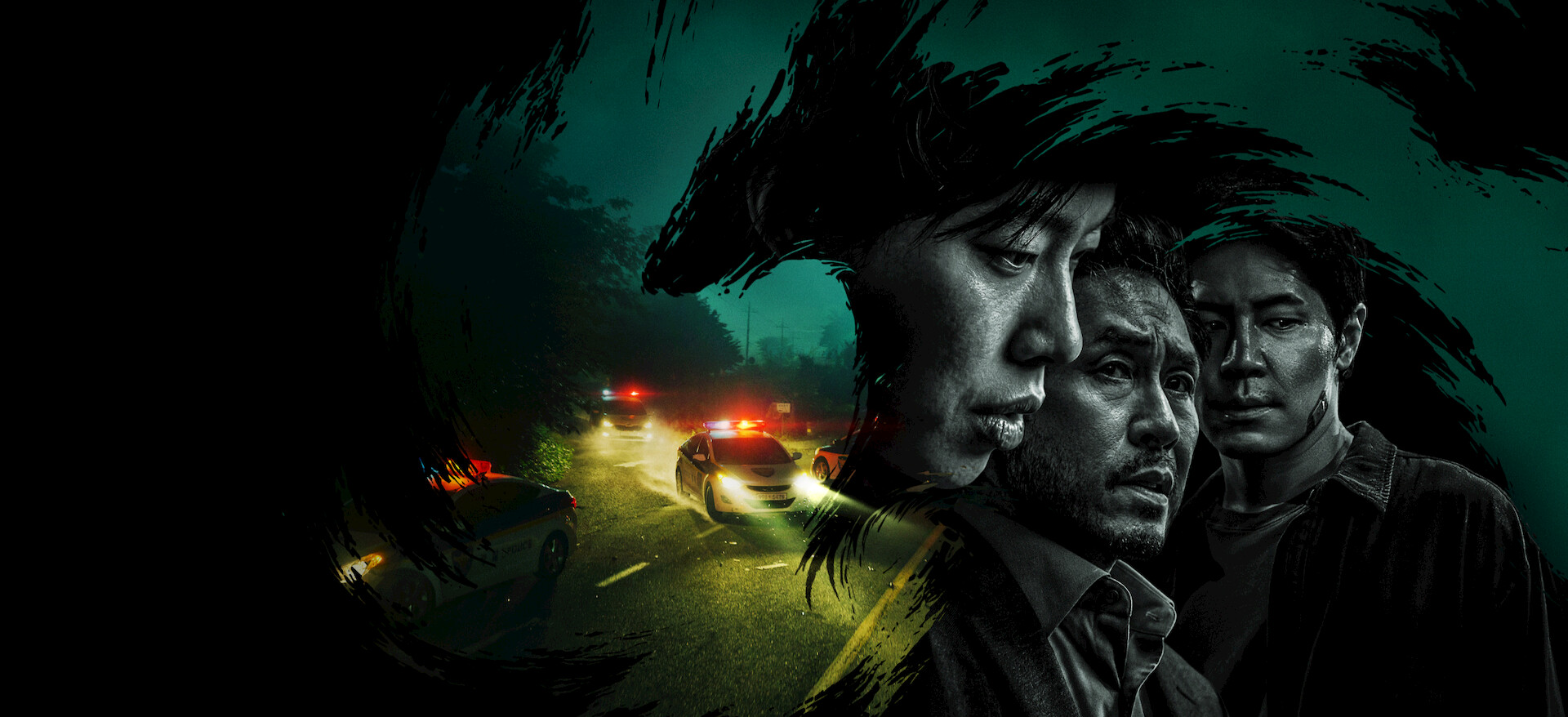

Netflix’s new thriller begins with an old fear: what if a copy of you could inherit not only your face, but the trust that makes your life yours?
In one of Korea’s most unsettling transformation tales, a household rat eats a person’s discarded fingernail and toenail clippings. The animal does not simply grow larger or learn to speak. It becomes the person.
The duplicate returns to the household, is accepted by the family and pushes the real owner outside. The nightmare is social before it is supernatural: the victim knows who they are, but knowledge is useless when everyone else recognizes the copy.
That old mechanism sits behind Netflix’s Korean mystery thriller Mousetrap (들쥐), scheduled to premiere globally on August 28, 2026. It also links the series to Ludvico’s Kakao Webtoon Field Mouse. The screen version moves the identity test from the family home to phones, passwords, money and reputation—but the rat’s most dangerous power remains the same. It understands that identity only works when other people and systems agree to accept it.
| At a glance | Details |
|---|---|
| Korean title | 들쥐 (deuljwi, literally “field mouse”) |
| Official Netflix English title | Mousetrap |
| Premiere | August 28, 2026, scheduled globally on Netflix |
| Source | Ludvico’s Kakao Webtoon Field Mouse |
| Director / writer | Kim Hong-sun / Lee Jae-gon |
| Main cast | Ryu Jun-yeol, Sul Kyung-gu, Lee Kyoo-hyung |
| The old story underneath | Korea’s “rat transformation” or “true owner and false owner” folktale family |
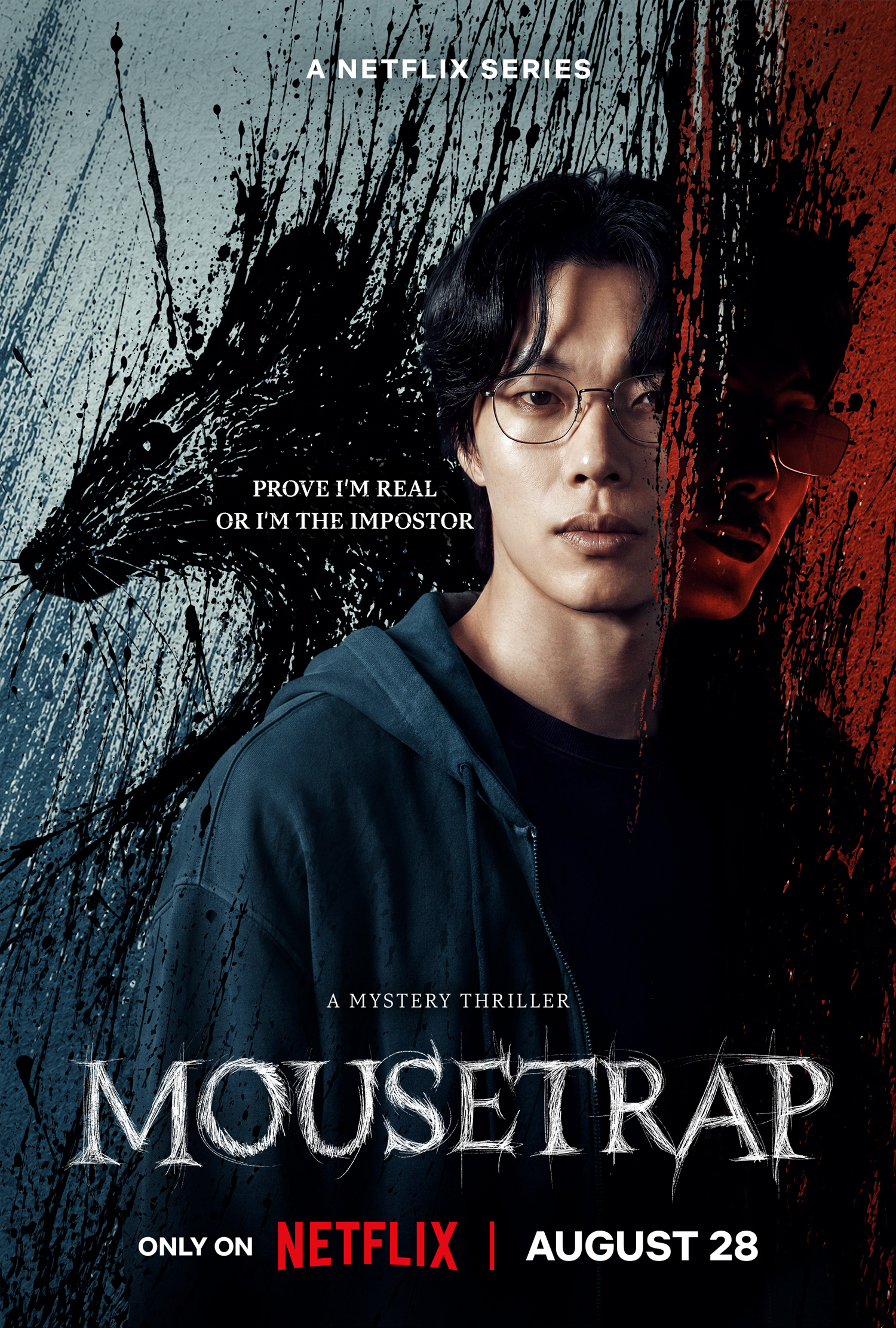
The official teaser poster makes the central question visible: which version of Moon-jae can prove he is real? Image: Netflix. Official announcement.
Official Netflix teaser: Moon-jae’s failed fingerprint and passwords turn the folktale’s stolen face into a modern authentication crisis.
The folktale: a careless clipping becomes a second self
There is no single screenplay-like version of the “fingernail-eating rat” story. The Academy of Korean Studies describes a nationally distributed family of tales also known as “the true owner and the false owner.” Details change from region to region, but a common line runs like this:
- A person carelessly throws away fingernail or toenail clippings.
- A rat repeatedly eats them and assumes the person’s form.
- The copy enters the household and is believed by the family—and sometimes even by a magistrate.
- The genuine owner is expelled and must find a way to expose the impostor.
- In a widely recorded ending, a cat kills the false owner, who returns to the form of a rat.
Some variants wait until the owner has left home. Others replace a young groom or a son. The cause may shift from discarded nails to abandoned clothing, and the helper who reveals the truth may change. Folklore survives through this flexibility: its job is not to preserve one authorized plot, but to keep a memorable danger alive as it moves between tellers.
The most disturbing moment is not the transformation. It is the household’s verdict. A spouse, relatives and local authority accept the duplicate while the real person is treated as a fraud. The story asks a brutal question long before digital authentication existed: if your community rejects your claim to yourself, what evidence do you have left?
Why fingernails mattered in Korean culture
To a modern reader, nail clippings may look like convenient horror props—small enough for a mouse to eat and intimate enough to feel disturbing. Their cultural weight is deeper.
The Korean encyclopedia connects the taboo to a Confucian understanding of the body as something received from one’s parents. Hair, skin and bodily remnants were not to be treated with careless disregard. This did not mean that every Korean household followed one identical nail-disposal ritual. Folktales exaggerate rules precisely because exaggeration makes them memorable. But the tale turns a familiar lesson about care into a spectacular punishment: neglect a part of yourself and something else may use it to take your place.
That moral also belongs to a broader Korean story tradition. The rat tale is linked to Onggojipjeon, a classic narrative in which a false Onggojip challenges an arrogant, miserly original. In both stories, identity is not protected by private certainty. It must be tested through conduct, relationships and recognition.
This is why the folktale still travels so well. A discarded clipping can now be read like leaked personal data: a tiny fragment that seems harmless until another actor turns it into access.
From oral tale to Ludvico’s webtoon
Kakao Webtoon lists Ludvico’s 들쥐 as a horror/thriller. Netflix identifies that webtoon as the direct source of the series. That distinction matters. The new drama is not a direct filming of an anonymous folktale; it reaches the old story through a contemporary authored work.
The webtoon’s central modern move is social absence. Its protagonist is a writer whose reclusive life creates space for another person to occupy. In the traditional tale, the owner is often away when the rat enters. In the modern version, someone can be physically present yet socially invisible—hidden behind a pen name, isolated from neighbors and known to institutions mainly through accounts and records.
| Story layer | What proves identity | What the impostor exploits |
|---|---|---|
| Oral folktale | Family recognition, local judgment, bodily truth | Careless disposal and absence from home |
| Ludvico’s webtoon | A withdrawn writer’s name, work and social position | Isolation and the gap between a private self and a public identity |
| Netflix series | Fingerprints, passwords, money, reputation and witnesses | Modern systems that treat stored credentials as more reliable than a person’s testimony |
Readers who want the full bridge can start with the official Kakao Webtoon page. The useful question is not whether every scene comes from folklore. It is what each medium chooses as the new equivalent of a nail clipping: the small, neglected proof that lets an outsider enter.
The Netflix series turns folklore into an authentication crisis
Netflix’s official setup introduces Moon-jae, a novelist who publishes under a pen name and has not left home in years. His fingerprint suddenly fails to unlock his phone. Passwords stop working. Money, reputation and the ordinary signals that connect him to his name begin to disappear. A figure calling himself “The Rat” appears to know exactly how to replace him.
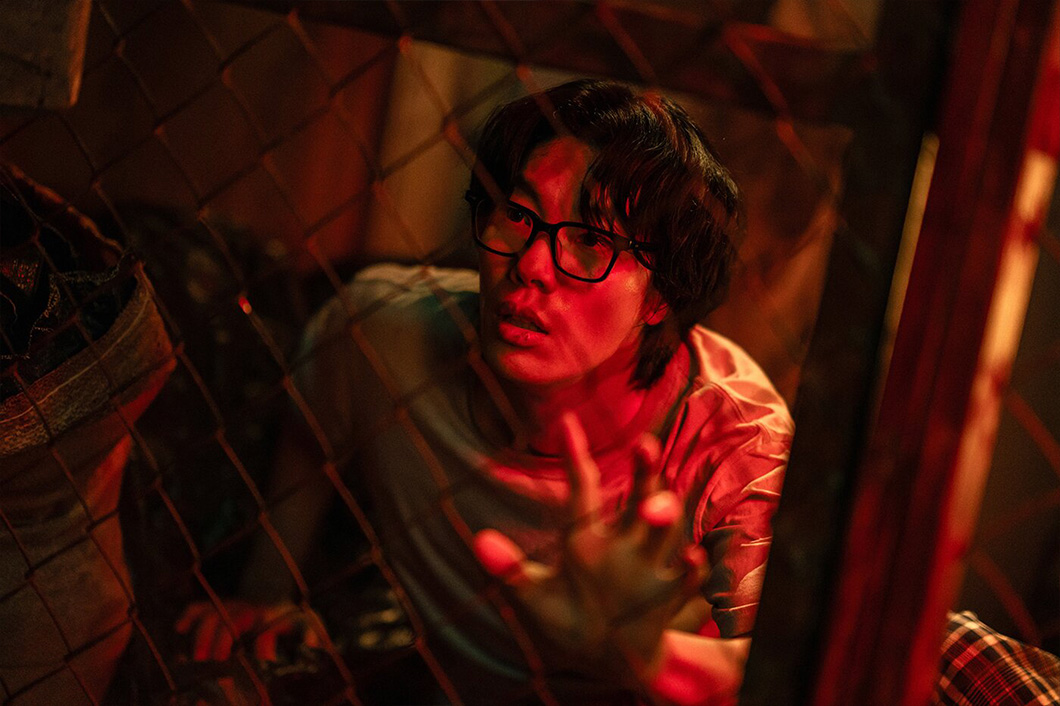
Moon-jae, played by Ryu Jun-yeol, is framed behind a barrier in an official production still. Image: Imaginus. See the production page.
The adaptation makes an intelligent substitution. A family in a village no longer needs to mistake one face for another. Databases, devices and financial systems can do the misrecognition instead. Once those systems decide the copy is genuine, Moon-jae faces the same problem as the expelled owner in the old tale: “I know who I am” is not accepted as proof.
The official English title, Mousetrap, adds another layer. The Korean 들쥐 names the creature. “Mousetrap” names a mechanism built around bait, capture and restricted movement. That difference is an editorially useful way to approach the series, even before release: watch not only for who “The Rat” is, but for the system that makes Moon-jae’s life into a trap.
The production is directed by Kim Hong-sun, whose Netflix credits include Dear Hongrang and Money Heist: Korea – Joint Economic Area, and written by Lee Jae-gon. Imaginus lists Kakao Entertainment, C-JeS Studios and H.HOUSE among the production companies.
Three actors, three ways of testing the truth
The cast is designed around different kinds of authority rather than three interchangeable suspects.
| Actor | Role | Why the casting changes the texture |
|---|---|---|
| Ryu Jun-yeol | Moon-jae, the reclusive novelist whose identity is stolen | Ryu moved from independent film Socialphobia and the television phenomenon Reply 1988 into characters whose restraint can carry unease. Here, the audience must stay close to a man whom the world has stopped believing. |
| Sul Kyung-gu | Noja, a fierce loan shark from Moon-jae’s past | A former theater actor and one of Korean cinema’s defining character actors, Sul can make threat, exhaustion and reluctant loyalty coexist. Noja’s practical power exists outside the clean logic of passwords and official records. |
| Lee Kyoo-hyung | Sun-yong, a detective pursuing “The Rat” | Lee’s theater and musical background, followed by Stranger and Prison Playbook, suits roles that can shift register quickly. As a detective, Sun-yong represents the institutional search for a truth that institutions have already failed to protect. |
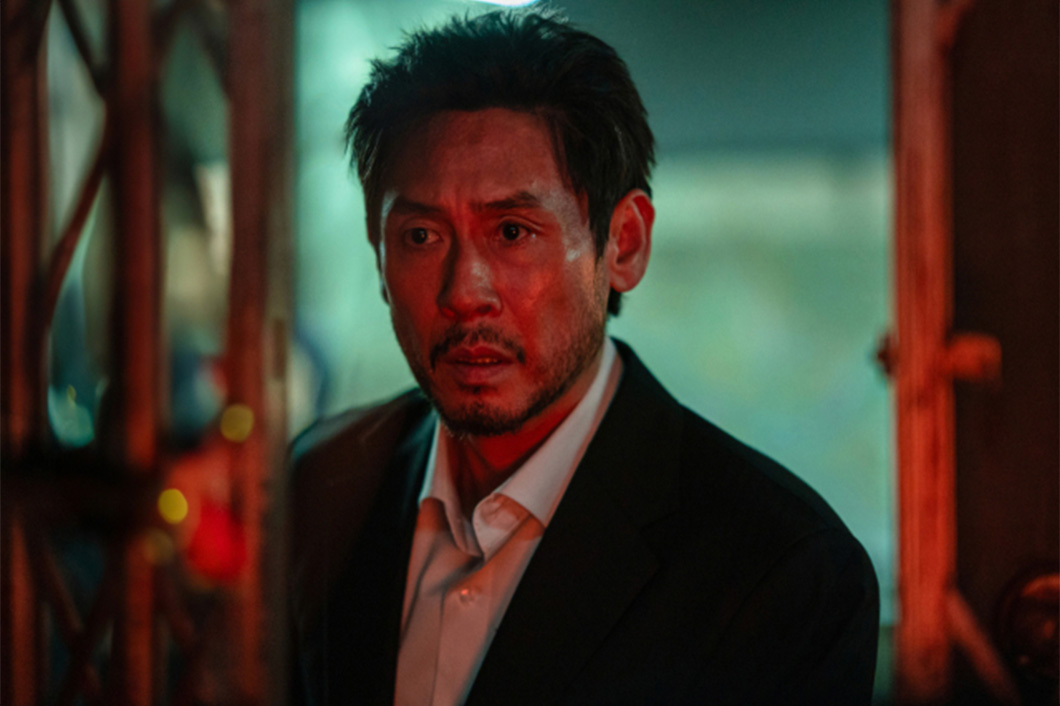
Sul Kyung-gu’s Noja occupies the story’s unofficial route to the truth. Image: Imaginus. Official production page.
Together they create three possible routes back to reality: personal memory, unofficial force and legal investigation. The series’ tension should come from whether any of those can defeat a duplicate who already controls the ordinary evidence.
Official routes: Netflix title page · Netflix announcement and poster · Imaginus production page and stills · Kakao Webtoon
What to notice when you watch
Do not watch only for the reveal of an impostor. Notice who is allowed to certify a person at each stage. Is it a phone, a bank, a colleague, a family member, a detective or a creditor? Which proof does Moon-jae trust until it fails him? Which relationships still recognize him when the data does not?
That is where the old Korean story remains alive. The rat is frightening because it eats something the owner considered disposable. The copy wins because the people around the owner confuse familiarity with truth. Mousetrap updates the props, but it does not need to update that fear. We already live among systems that recognize a fingerprint, a password and a transaction history more quickly than they recognize a human being.
The folktale’s warning was never merely “dispose of nail clippings properly.” It was to pay attention to the pieces of yourself that the world uses to decide who you are.