


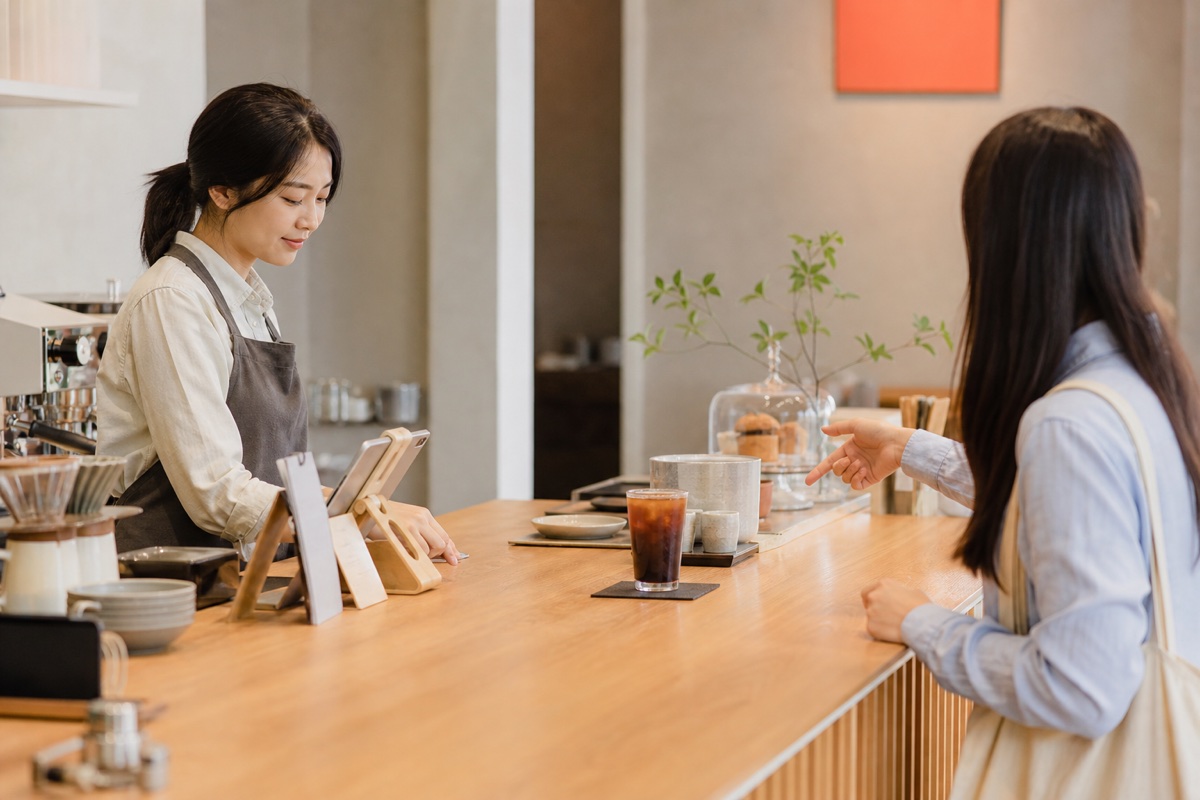

Korean cafés range from small neighborhood espresso bars to large bakeries, roasteries, traditional tea rooms, and highly designed destination spaces. The ordering flow is usually easy once you know where to look, but each shop can set its own rules for seating, minimum orders, outside food, and tray return.
Read the room before joining a line
Look for a counter, kiosk, queue marker, or sign asking guests to choose a seat first. In some cafés you order before sitting; in others, especially busy or multi-floor spaces, staff may ask you to secure an available seat. If you are uncertain, “Yeogi-eseo jumunhaeyo?” means “Do I order here?” A simple gesture toward the counter also works.
Do not assume that an empty table is available. A small item may be holding the seat, or a reserved floor may have separate instructions. Keep luggage out of the queue and stairway.
Understand the most common menu choices
An Americano is a widely available black coffee. A café latte includes milk. “Ade” usually describes a sweet, sparkling fruit drink rather than coffee. Many cafés also sell tea, smoothies, seasonal drinks, cakes, bread, or plated desserts.
Choose hot or iced when the menu offers both. “Ttatteuthage” means hot and “aiseuro” means iced. For decaf, ask “Dikapein dwaeyo?”—“Is decaf available?” Availability and extra charges differ by café.
Use the menu’s product name when possible
Pointing to the item while saying the displayed Korean or English name prevents confusion. You can also show the menu photo or number. Useful phrases include:
- Igeo hana juseyo: Please give me one of this.
- Aiseuro juseyo: I would like it iced.
- Meokgo galgeyo: I will have it here.
- Pojanghae juseyo: Please make it to go.
- Yeongsujeung juseyo: Please give me a receipt.
Pronunciation does not need to be perfect. Clear pointing, the quantity, and a friendly tone are usually more useful than a long translated sentence.
Kiosks and payment
At a kiosk, first look for a language button, often near the top corner. Select the drink, temperature, size, options, and dine-in or takeaway choice before payment. Review the final screen because add-ons can change the price. Most urban cafés accept credit cards, but foreign-card acceptance is not guaranteed at every kiosk. If the kiosk rejects a card, ask whether counter payment is possible.
Avoid tapping repeatedly while the machine processes. If the screen freezes after payment, show the receipt or bank authorization to staff rather than paying a second time immediately.
Collecting the order
You may receive a numbered receipt, pager, table device, or verbal call. Names and numbers can be difficult to hear in a crowded café, so stay where you can see the collection counter. At takeaway windows, keep the entrance clear while waiting.
Check whether straws, napkins, water, and lids are self-service. Some shops have a separate return station; others expect you to leave tableware at the table. Follow the signs instead of assuming one national rule.
Seating and time
Many cafés function as social and work spaces, but a seat is still part of a private business. A one-drink-per-person policy is common in some destination cafés but is not universal. Large groups, children, laptops, photography, pets, and use of outdoor seats may have special rules. Read the posted policy and ask when unsure.
During peak hours, avoid occupying several seats with bags. Keep calls quiet, use headphones, and leave power outlets available when the café restricts charging.
Photography without turning the café into a set
Photograph your own drink and table without including strangers. Ask before taking wide interior photos, using a large camera, moving furniture, or conducting a styled shoot. A café that welcomes casual phone photos may still prohibit commercial photography or tripods.
Dietary needs
Plant-based milk, decaf coffee, sugar-free syrup, and allergen information vary by shop. A drink described as “non-coffee” can still contain milk, nuts, grains, or caffeine from tea or chocolate. If an allergy is serious, ask staff to check the product and understand that shared equipment can create cross-contact.
A simple order example
Point to the menu and say: “Aiseu latte hana, meokgo galgeyo.” That is one iced latte to have in the café. After payment, keep the receipt, wait for the number, collect the drink, and follow the shop’s tray-return signs when leaving.
Last fact-checked: July 25, 2026. Menu names, payment methods, and shop policies vary.
