


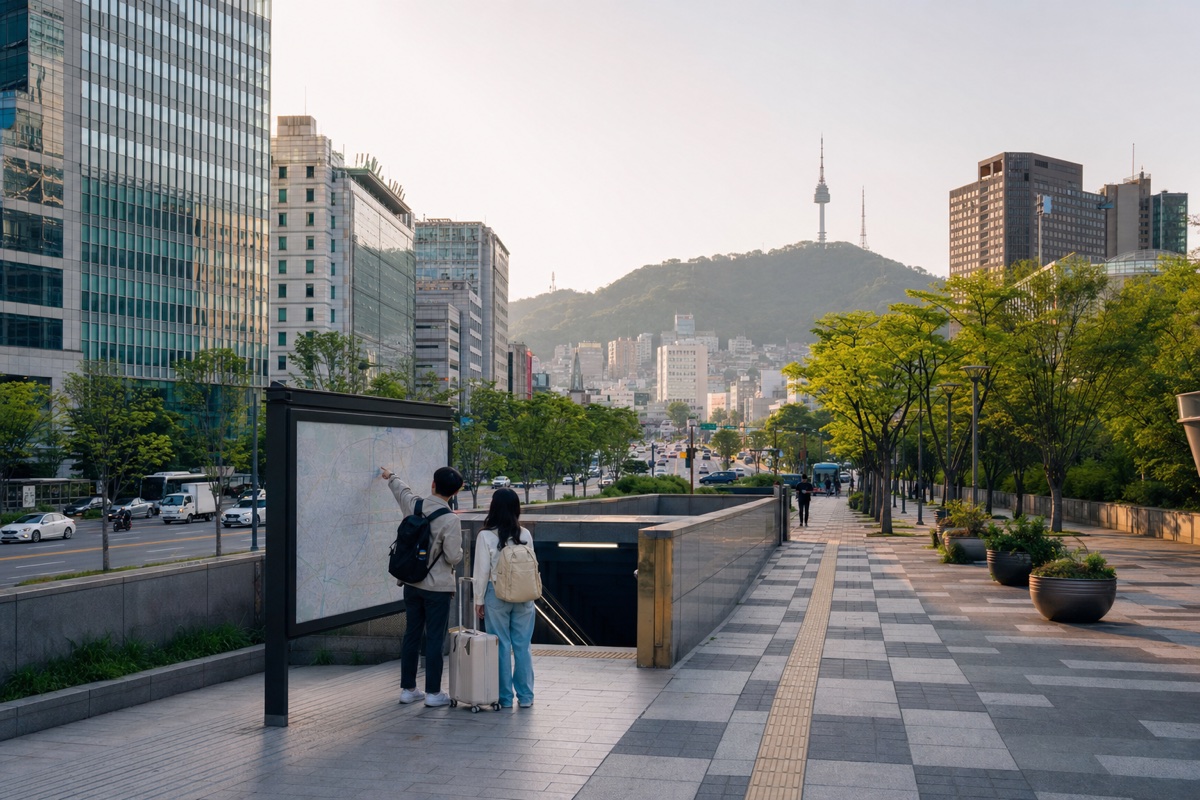

Your first day in Seoul should solve the basics without turning jet lag into an endurance test. The most reliable plan is simple: reach your accommodation, establish transport and connectivity, eat nearby, walk through one area, and finish early enough to reset for the next morning.
Before landing, save four pieces of information
- Your accommodation name and road address in Korean and English.
- The nearest subway station, exit number, and airport transport stop.
- Your check-in time and luggage-storage policy.
- An offline copy of your passport details, reservation, and first-day route.
Do not rely on an accommodation name alone. Seoul can have several properties with similar English names, and a Korean road address is more useful when asking for directions.
Choose the airport transfer that matches your destination
From Incheon International Airport, travelers can use airport rail, limousine buses, or taxis. The best choice depends on the final neighborhood, luggage, arrival time, and number of people—not on a universal ranking.
Rail is predictable and connects with Seoul’s subway network, but a transfer with heavy luggage can be tiring. Airport buses can stop near major hotels and districts, but travel time varies with traffic. A taxi offers door-to-door travel and can make sense for a group or late arrival, but the fare and duration depend on the destination and traffic. Use the airport or Seoul city’s official transport information for the current terminal, stop, and schedule.
Set up mobile data before you need it
Activate an eSIM, SIM, or roaming plan while airport Wi-Fi is available. Test a map, message, and browser connection before leaving the terminal. Save your accommodation and one emergency contact in the phone’s notes. Public Wi-Fi is common in transport hubs and cafés, but it should be a backup rather than the only way to access a ticket or map.
Get one transport payment method
Rechargeable transportation cards such as T-money can be used across Seoul public transport. Cards and top-ups are available at designated convenience stores and station facilities; accepted payment methods can differ by machine and location. Keep some Korean won available because some recharge situations still rely on cash.
On buses, enter through the front, tap the card, press the stop button before your stop, tap again when leaving, and exit through the rear when instructed. On the subway, tap at both entry and exit gates. If you are visiting for several consecutive days, compare ordinary pay-as-you-go travel with any current tourist or short-term pass using the official rules.
Check in, then reduce the plan
After reaching the accommodation, store luggage, charge devices, and confirm the route back. If the room is not ready, keep essential medication, valuables, and a light layer with you. Avoid placing a major timed attraction immediately after an international arrival; immigration, baggage, transport, and traffic can all change the schedule.
Choose one first-day neighborhood
Pick an area within one direct ride or a comfortable walk from your accommodation. A successful arrival-day loop includes a meal, a practical shop or convenience store, and one landmark or riverside walk. It does not need to include every famous district.
- Jongno: useful for a first look at central streets, markets, and palace-area exteriors.
- Myeong-dong: convenient for shopping, currency services, and an easy evening meal.
- Hongdae or Yeonnam: good for cafés and a casual walk if you are staying in western Seoul.
- Gangnam: practical when your hotel and later plans are south of the river.
These are planning examples, not fixed itineraries. Match the area to your accommodation and energy level.
Eat a simple first meal
Choose a place with a visible menu, clear pricing, and food that suits your arrival-day appetite. Many restaurants use counter ordering, table call buttons, or kiosks; the process varies. Keep bags out of narrow aisles and return trays only when the restaurant indicates self-service.
If you have a serious allergy, prepare a Korean allergy card that states the ingredient and the risk of cross-contact. A translation helps communication but cannot guarantee an allergen-free kitchen.
Finish before fatigue makes decisions for you
Buy water, breakfast, and any missing adapter or toiletries near the accommodation. Set the next morning’s route, alarm, and weather layer. If you are struggling to stay awake, a short walk and early night are usually more valuable than crossing the city for a night view.
First-day checklist
- Confirm the airport terminal and transfer stop.
- Test mobile data and save the Korean address.
- Set up a transport card and keep a little cash.
- Store luggage and charge the phone.
- Explore one nearby district.
- Prepare breakfast and the next morning’s route.
Last fact-checked: July 25, 2026. Fares, passes, and schedules change; verify them on the linked official services.
