



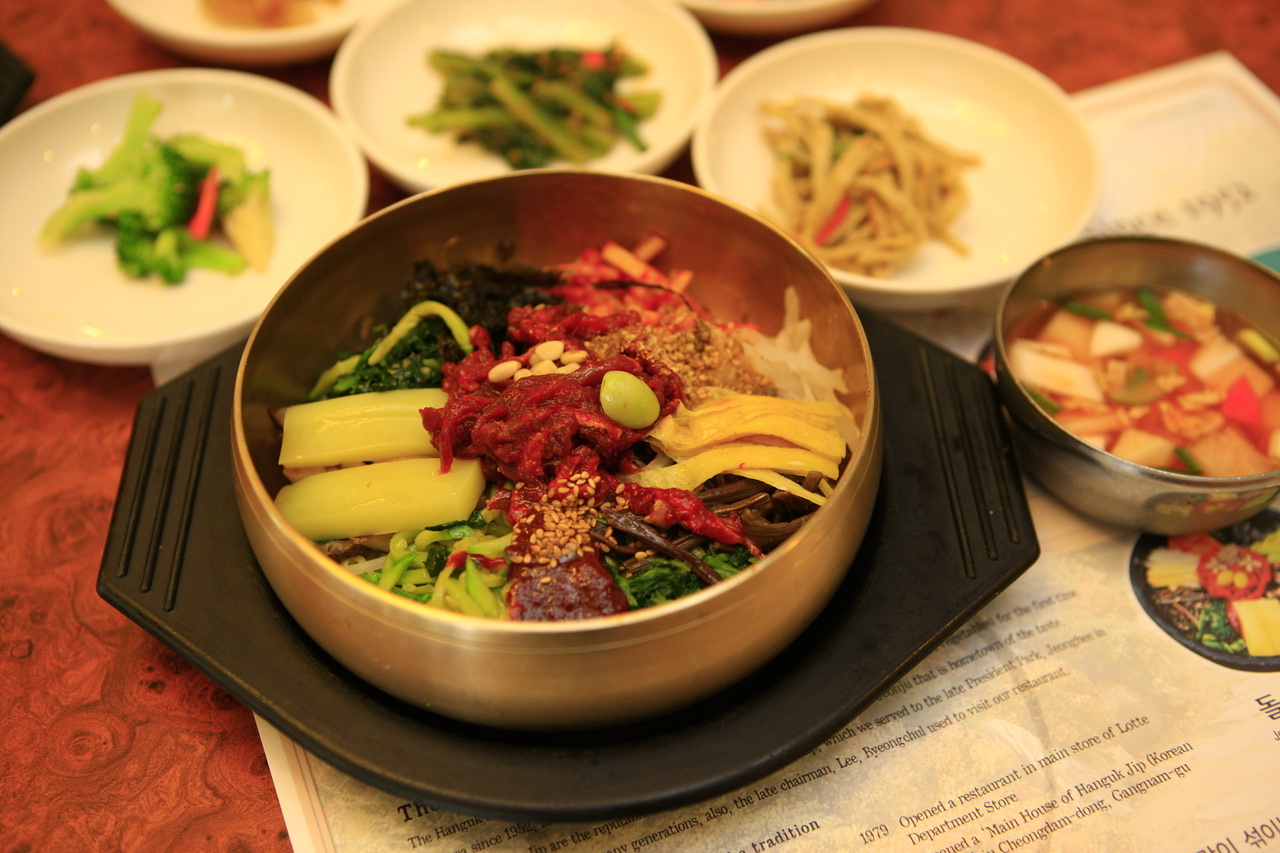

At many Korean restaurants, a meal begins with more than the dish you chose. A bowl of rice, a soup, a few small plates, a spoon, and chopsticks arrive as one table. Once you see how those pieces work together, ordering becomes much easier.
The first decision is usually simple: choose the main dish you want to eat. The table will do the rest of the explaining. Many Korean meals are built around several dishes arriving together: rice, soup, kimchi, and banchan—the small side dishes placed around the main food.
Begin with the utensil that feels natural, then look at the table once and see what each part is there for. That small pause makes the next choice easy.
One order can become a whole table
VISITKOREA uses han sang charim for an arrangement that brings several dishes to the table at once. Rice and soup sit in front of the diner, with a main dish and side dishes arranged around them. In a restaurant, the exact combination changes with the menu, but the underlying idea is familiar: one chosen dish sits inside a larger meal.
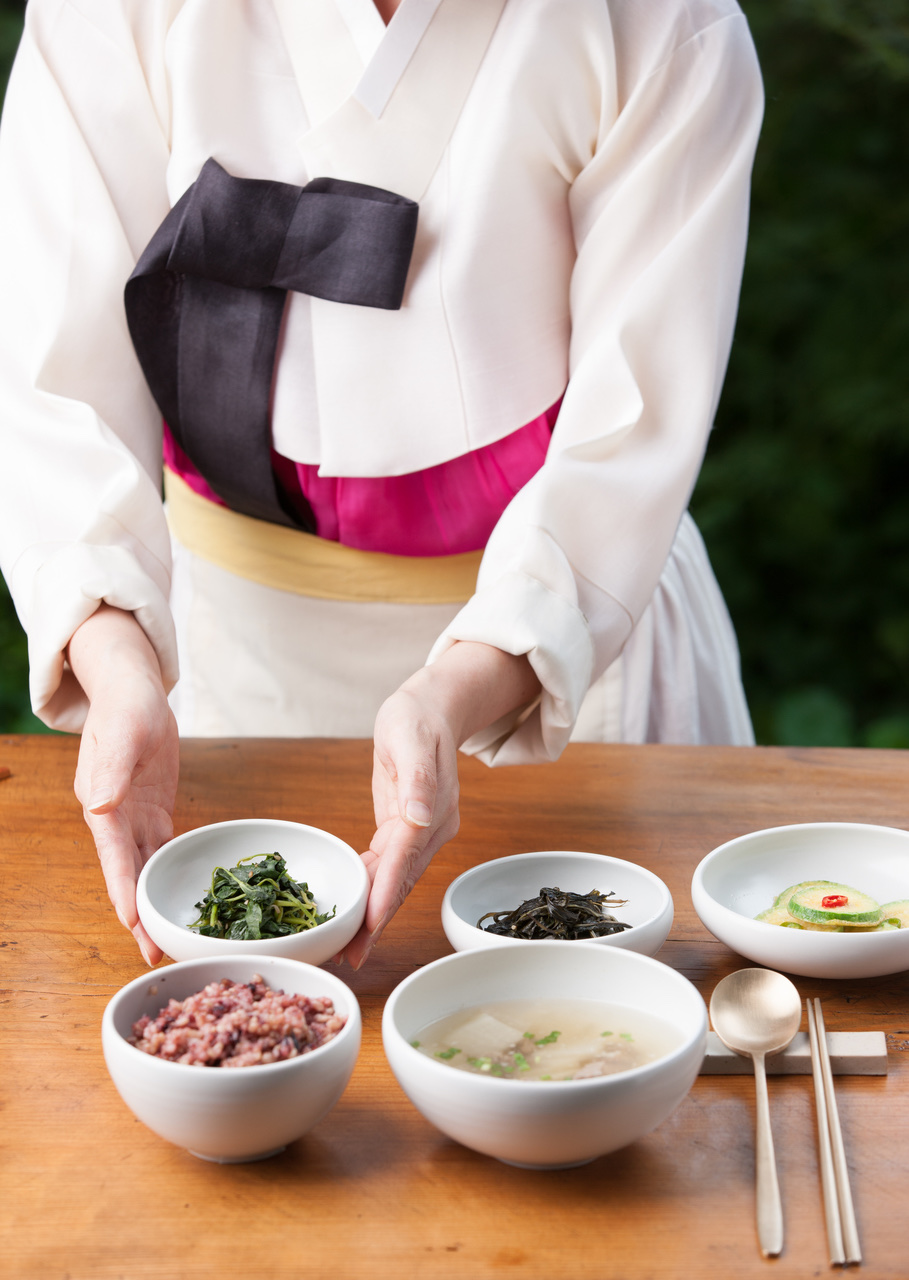
A hanjeongsik table setting in Seoul, one restaurant example of the rice, soup, and side-dish table context discussed here. Korea Tourism Organization TourAPI / Kim Ji-ho.
That is why a table can look full before you have ordered extra food. Kimchi, seasoned vegetables, pickles, or another small dish may appear beside the main order. They are part of the meal’s rhythm, giving you different combinations with rice, soup, and the main dish.
| What you see | A practical way to read it |
|---|---|
| Banchan | Small side dishes that can be eaten alongside rice or the main dish in any order you enjoy |
| Rice and soup | The steady center of many set meals; the spoon is especially useful here |
| Main dish | The item that shaped the order: stew, noodles, grilled meat, fish, rice bowl, or another specialty |
| Shared dishes | Food placed in the middle may be intended for the table; watch how the restaurant presents it and ask if you are unsure |
A short introduction to Korean food from the Korean Food Promotion Institute.
A short introduction to Korean food from the Korean Food Promotion Institute.
Start with the main dish, take a little rice or soup, then let the side dishes join the meal naturally.
Start with the dish you came for
The menu has one job at the beginning: help you choose the center of the meal. A stew, a noodle dish, bibimbap, a grilled-meat set, or a simple rice meal each creates a different table. You can use the menu’s photos and names to make that first choice, then let the restaurant’s side dishes fill in the context.
If you are eating alone, a single dish is often the clearest place to start. If you are sharing, choose one or two main dishes and notice whether the menu is written for a table rather than an individual. A small question at the start can prevent an oversized order: is the portion presented as one dish, a set, or something intended to share?
Food requirements deserve the same directness. If you avoid an ingredient, say so before the kitchen begins the order and describe the ingredient clearly. A dish name alone does not always reveal the broth, sauce, egg, seafood, or meat used in preparation.
Read the room before you call for help
Some Korean restaurants place water, side dishes, or utensils at the table. Others keep them at a self-service station or use an ordering kiosk. Before calling a server, take a quick look around the table and dining room. It shows which rhythm this particular restaurant uses.
| You may find… | What it helps with |
|---|---|
| A call bell | Press it when you need staff assistance; it may be louder than expected |
| A slim drawer under the table | Spoons, chopsticks, or napkins may be stored inside |
| A self-service station | Water, cups, and sometimes side dishes may be collected there |
| An ordering kiosk | The restaurant may take the order through the screen |
| Storage inside a chair | A place to keep a bag or outer layer away from food smoke |
VISITKOREA lists self-service water or side dishes and unmanned ordering machines among restaurant setups visitors may encounter; other restaurants may take the order directly at the table. The room itself gives the first cue. If you cannot see where to begin, a staff member can point you in the right direction.
Look around the table: A call bell, utensil drawer, self-service station, or ordering kiosk can show how that particular restaurant works.
At a barbecue table, the meal moves together
Korean barbecue makes the shared structure visible. Meat, vegetables, sauces, rice, stew, and noodles can arrive in stages, and the grill in the center gives the table a shared task. Some restaurants grill for diners; in others, the table manages the cooking. The menu, staff guidance, and the equipment in front of you make that clear quickly.
At the grill, let the meat join the rest of the meal. Pair a piece with rice, a side dish, or a leaf wrap if that is how the restaurant has set the table. Add more after you have seen how much arrives and how quickly the group eats.
Finish the meal with the same calm rhythm
When you are ready to pay, follow the restaurant’s sign or ask staff where payment is handled. Tipping is not required or expected in Korea, according to VISITKOREA. The important thing is to use the payment method and place that the restaurant itself indicates.
By the next meal, the table will be easier to read. Start with the main dish, take a quick look around, and let the rest of the meal unfold from there.
A first-meal checklist
- Choose one main dish before trying to interpret the entire table.
- Look once for water, utensils, a call bell, a self-service station, or an ordering screen.
- Ask directly about ingredients that matter to you.
- At a grill, wait to see the restaurant’s service style before ordering too much.
- Pay where the restaurant directs you; tipping is generally not expected.
Sources
- Korea Tourism Organization: About Korean Food
- Korea Tourism Organization: Korean-food field guide
- Korea Tourism Organization: Sides for Meat Orders (sangcharim)
The cultural guidance and links were checked on August 21, 2026. Restaurant layouts, menus, service style, and payment options vary by venue.